Our Philosophy
The First Three Questions We Ask You
First meetings typically start here. We understand where you are, what you need, and how confident you feel moving forward.
1
Are you happy with the advice you’ve been getting?
Have you felt confident in the financial advice you’ve received over the past few years? Whether you’ve been managing things on your own or working with another advisor, it can be valuable to get a thoughtful second opinion.
2
Do you know what you need in the future?
Do you know how much you truly need to retire comfortably and stay comfortably retired? We help you calculate the exact percentage of income to save each year, prepare for major life events and purchases, plan for the unexpected—like early retirement, market downturns, or long-term care—and spend confidently in retirement, knowing you're withdrawing the right amount to sustain your lifestyle for decades.
3
Are your investments aligned with your time horizon?
Are you taking too much risk for near-term needs—or too little for long-term goals? Are you taking the right kind of risk, or are your investments driven by fear and headlines rather than a well-designed plan?

Over 30-year retirements, short-term market moves are irrelevant. What matters is asset allocation, diversification, and staying invested.
Ernie Moosherr, MBA, ChFC®
Founder, Canopy Wealth Management
The 7 Principles of Long-Term Investing
A sound investment plan is built on these core principles.
1
Optimism Is Rational
Be wary of negative headlines and bad social media advice, innovation and economic growth continue over time. Betting against progress has historically been a losing strategy.
2
Resources Are Limited
Investment performance is secondary if you’re not saving enough or allocating your money appropriately. Resources are limited, and good planning is about choosing what matters most today so your future needs aren’t sacrificed.
3
Markets Are Unpredictable
No one can predict markets consistently. Successful investing comes from discipline and planning—not guessing on what markets will do next.
4
Your Plan Is Personal
What works for others may not be right for you. The only plan that matters is the one aligned with your goals and risk tolerance.
5
Behavior Beats Performance
Emotional decisions—panic selling, chasing winners, or staying in cash—cause more damage than not finding the perfect investment. Discipline through market cycles and volatility is what drives long-term results.
6
Equities Drive Long-Term Wealth
The cost of living naturally rises over time. With 3% inflation, prices double roughly every 24 years. To help preserve your purchasing power for the long term, investing in stocks is an essential part of your financial strategy.
7
Invest For the Long-Term
Over 30-year retirements, short-term market moves are irrelevant. What matters is asset allocation, diversification, and staying invested.
Four Stories That Will Change How You Invest
Timing
You Can't Predict Markets
Warren Buffett, one of history's most successful investors, once said: "I have never met a man who could forecast the market." That's a powerful insight from one of the most successful investors in history. Consistently predicting market movements is extremely difficult—if not impossible.
The research supports this view. Studies show that investment performance tends to be inconsistent over time. A fund manager who performs exceptionally well in one period may deliver average results in the next. Similarly, market timing and stock picking strategies often struggle to outperform broad market indexes over the long term.
For most people, this suggests that energy spent trying to predict the market might be better directed elsewhere—toward your career, building skills, or simply enjoying life while your investments grow steadily over time.
The research supports this view. Studies show that investment performance tends to be inconsistent over time. A fund manager who performs exceptionally well in one period may deliver average results in the next. Similarly, market timing and stock picking strategies often struggle to outperform broad market indexes over the long term.
For most people, this suggests that energy spent trying to predict the market might be better directed elsewhere—toward your career, building skills, or simply enjoying life while your investments grow steadily over time.
Behavior
Behavior Is Controllable
The best-performing equity fund in America from 2000 to 2009 (CGMFX) returned an average of 18% per year. Yet the average investor in that fund lost 11% annually during the same period.
How is that possible?
The fund returned 80% in 2007. When those returns were announced, investors poured in. Then the fund dropped 48% in 2008. Many bought near the peak and saw their investments decline sharply.
The fund later underperformed the market, sometimes by more than 25% from about 2014–2016, and assets shrank as investors exited. Timing and behavior matter as much as picking the right fund.
How is that possible?
The fund returned 80% in 2007. When those returns were announced, investors poured in. Then the fund dropped 48% in 2008. Many bought near the peak and saw their investments decline sharply.
The fund later underperformed the market, sometimes by more than 25% from about 2014–2016, and assets shrank as investors exited. Timing and behavior matter as much as picking the right fund.
Innovation
Progress Never Stops
Paul Romer—a Nobel laureate in economics—wrote:
"Every generation has perceived the limits to growth that finite resources and undesirable side effects would pose if no new recipes or ideas were discovered. And every generation has underestimated the potential for finding new recipes and ideas. We consistently fail to grasp how many ideas remain to be discovered."
Many people assume everything's getting worse and the world is falling apart. Don't believe it. History suggests otherwise. Optimism has been the worldview that's actually matched reality."
If it bleeds it leads"—the news won't tell you that literacy rates climbed in dozens of countries today, or that life expectancy increased again this year, or that researchers made another breakthrough in materials science. But all of that is happening right now, every day.
"Every generation has perceived the limits to growth that finite resources and undesirable side effects would pose if no new recipes or ideas were discovered. And every generation has underestimated the potential for finding new recipes and ideas. We consistently fail to grasp how many ideas remain to be discovered."
Many people assume everything's getting worse and the world is falling apart. Don't believe it. History suggests otherwise. Optimism has been the worldview that's actually matched reality."
If it bleeds it leads"—the news won't tell you that literacy rates climbed in dozens of countries today, or that life expectancy increased again this year, or that researchers made another breakthrough in materials science. But all of that is happening right now, every day.
Inflation
Costs Always Rise
Every dollar a 45-year-old spends today could be worth roughly fifteen dollars to their 75-year-old self. At the stock market's historical average return of about 10% annually, that single dollar can multiply fifteen times over thirty years.
At just 3% annual inflation, prices double every twenty-four years. That means everything you need to buy (housing, food, medicine, energy) will cost twice as much in roughly a generation.
Keeping your wealth in "safe" investments like bonds or savings accounts tends to erode purchasing power over time.
For more than a century, stocks have delivered real returns, after accounting for inflation, that are more than double what bonds provide.
At just 3% annual inflation, prices double every twenty-four years. That means everything you need to buy (housing, food, medicine, energy) will cost twice as much in roughly a generation.
Keeping your wealth in "safe" investments like bonds or savings accounts tends to erode purchasing power over time.
For more than a century, stocks have delivered real returns, after accounting for inflation, that are more than double what bonds provide.
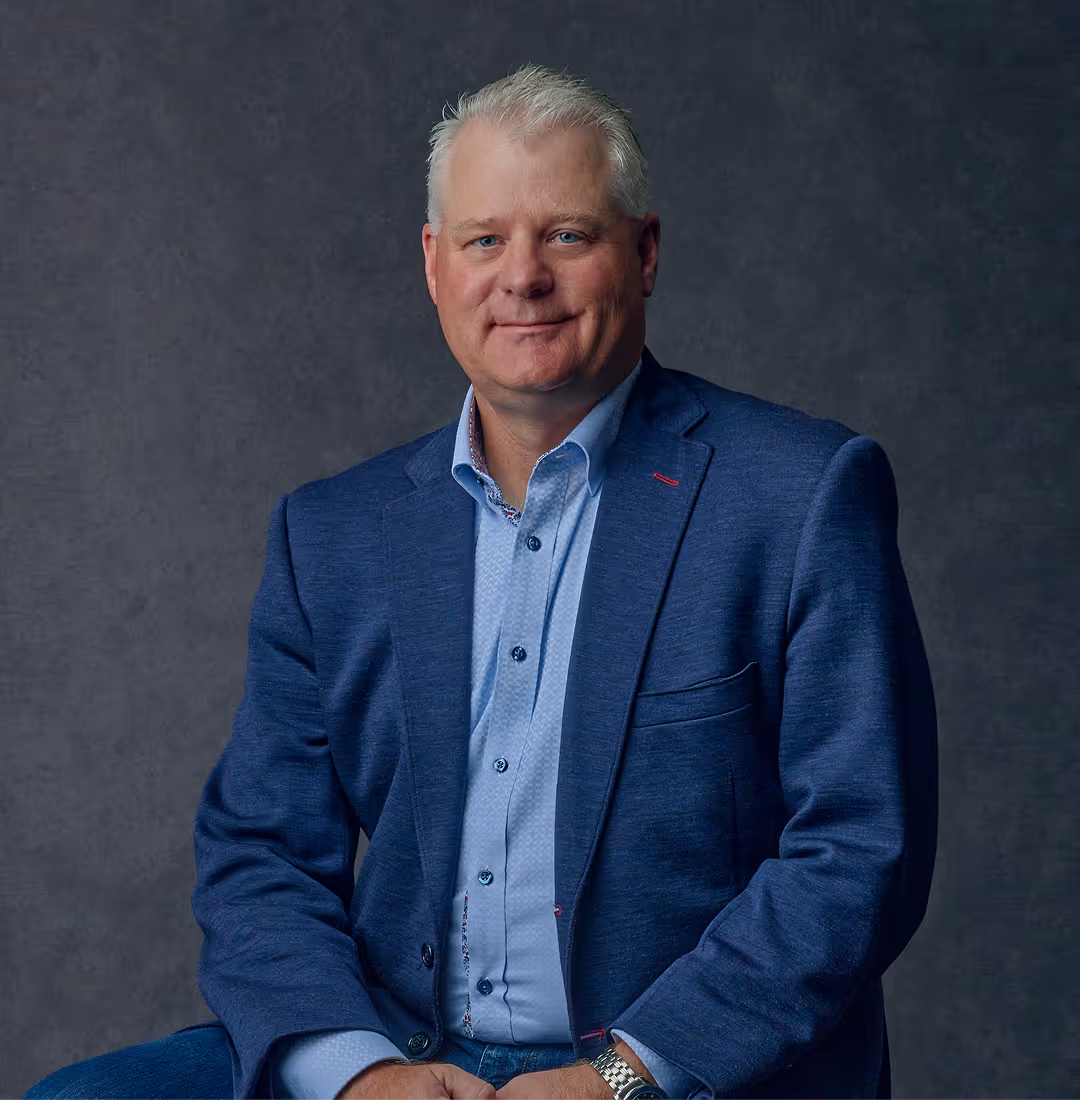
What works for others may not be right for you. The only plan that matters is the one aligned with your goals and risk tolerance.
Eric Raether CFP®
Founder, Canopy Wealth Management
Get Started
Step 1
Step 2
Step 3
Step 1
Get to Know Each Other
- We talk through your goals, questions, and current situation
- You share the big pieces: income, savings, benefits, what’s on your mind
- You get a sense of how we think, how we work, and how we help people like you
Step 2
Analyze Your Situation
- We review investments, fees, and tax impact
- We show you what’s working, what’s not, and how we’d improve things
- You get a clear picture of the value we can add — before making any commitment
Step 3
Onboard With Confidence
- We connect your accounts and build your full financial plan
- Your investments, cash flow, and tax strategy get aligned
- You walk away knowing what’s happening, why, and what comes next